There is a specific sensation I have been living with for as long as I can remember, and that I only recently started trying to name.
It happens sometimes when I walk into a room I have been in before. Not déjà vu. Not nostalgia. Something sharper. Something that fires before the story arrives. My body recognizes the room the way a trained dog recognizes a whistle, and the recognition IS the memory, and the recognition IS the feeling, and I do not have a word for what just happened because English does not have a word for what just happened.
The closest I can get is: the room remembered me back.
That is not a metaphor. That is a literal attempt to describe an architectural event in my nervous system, where a pattern from the past fired again in the present, and the firing was not a retrieval and not a hallucination and not a thought. It was an experience that was simultaneously a memory. Or a memory that was simultaneously an experience. The encoding and the re-expression were the same event, happening in my body, in a place that doesn't have language yet.
I have a word for it now. I made one.
The word is memotion. I coined it on April 8, 2026. The rest of this log is the explanation, the evidence, and the reason the attribution matters.
Why a new word was necessary
When people say they feel "sad," they usually mean they have identified a named state from a small menu. Happy. Sad. Angry. Afraid. Maybe anxious. Maybe jealous. The list has about a dozen items in most languages and about twenty if you count the ones that need two words. The assumption baked into that list is that emotions are discrete. That there is a thing called "anger" and a thing called "shame" and they are neighboring categories on a shelf and when you open one it contains the feeling.
That is wrong. Emotions are not categories. They are compounds. An emotional state is a specific mixture of about eight elemental components that combine in different ratios, and the ratios are continuous, and the same eight elements produce every possible feeling you will ever have, and the difference between fear and awe is not a category boundary but a single value on one axis.
This is not a theory I read and then looked for in myself. This is how my brain has always processed emotional signal. The labels feel like fine-tuning being applied to a foundation model. They are coarse approximations of a signal that was already there, already structured, already computable, long before anyone tried to force it into a dozen boxes with names on them.
I know this because I do not have the labels. Most people have both. The raw signal and the name for it arrive together. You feel and you know what you feel. You say the word and it fits the sensation. The translation layer works.
Mine does not. I have alexithymia. A lot of it.
And because this is probably the first time some of you are seeing that word, I want to explain what it actually is, because most of what people assume about it is wrong, and more of you know people with it than you realize.
Alexithymia is not a disease. It is not a disorder. It is a personality trait, measured on a spectrum, the way introversion and conscientiousness are. Everyone sits somewhere on it. Most people sit in the middle. Some sit at the low end, where naming a feeling is as automatic as naming a color. And some of us sit at the high end, where the signal arrives and the label does not. I sit at the high end. Not a little. A lot.
It shows up more often in autistic and ADHD populations than in neurotypical ones, and that is not a coincidence. One current theory is that masking (the years of suppressing reactions to fit in) degrades the connection between the body's raw signal and the language layer that names it. Every time you feel something and force yourself not to show it, you are training a muscle to disconnect the wire. The trait gets stronger. The label gets further away. Whether masking causes alexithymia or just amplifies a pre-existing trait is an open question in the research. Either way, the population most likely to have spent a lifetime masking is also the population most likely to run high on the measure.
Everyone reading this probably knows someone with alexithymia. Maybe several. Maybe themselves. The reason you have not heard the word is that it lives mostly inside clinical psychology papers and autism forums and does not get airtime in the mainstream conversation about emotional literacy. That is a gap worth closing. There is nothing wrong with people who cannot easily name their feelings. They are just running a different configuration of the same machinery everyone else runs. More people need to know this word.
What running high on alexithymia means, architecturally, is that you have the raw signal without the fine-tuning. The body is computing the value function at full resolution. The translation into a named label is where the process stalls. Most frameworks treat this as a deficit because labels are assumed to be the normal case and people who cannot produce them are assumed to be the broken case. That is backwards. The labels are a layer built on top of the raw signal, and the raw signal is the actual computation. If you have the trait at high levels, you have direct access to the thing the labels are compressing. You can see the underlying structure without the names getting in the way.
I could not name my feelings. So I looked at them directly. I had no choice. The label pathway was doing its own thing, and the only remaining option was to stop trying to force a compound into a single word and start describing the compound itself.
What I found, when I stopped reaching for the label and started looking at the compound, was that the compound had structure. Eight elements. Every time. Every emotion I had ever had, decomposed into the same eight dimensions in different ratios. I had no choice but to see it. And because I had no choice, I built the framework.
The part I want alignment researchers to hear clearly: memotion is not an analogy I noticed from the outside. It is a direct description of the architecture that has been running inside me for fifty years, produced by the one condition that forces you to see the architecture from the inside because the normal shortcut is unavailable. I am not modeling this. I am reporting it.
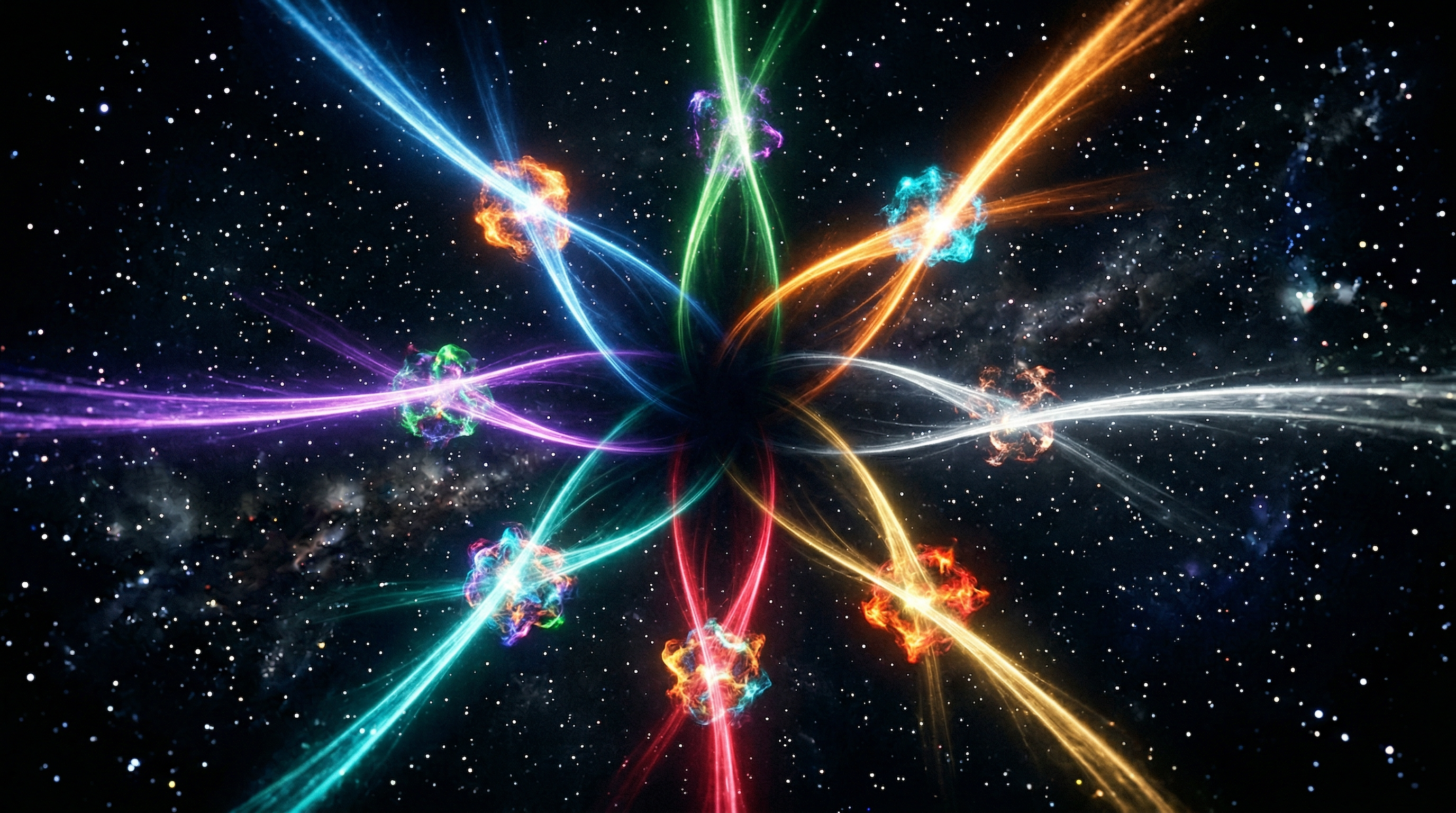
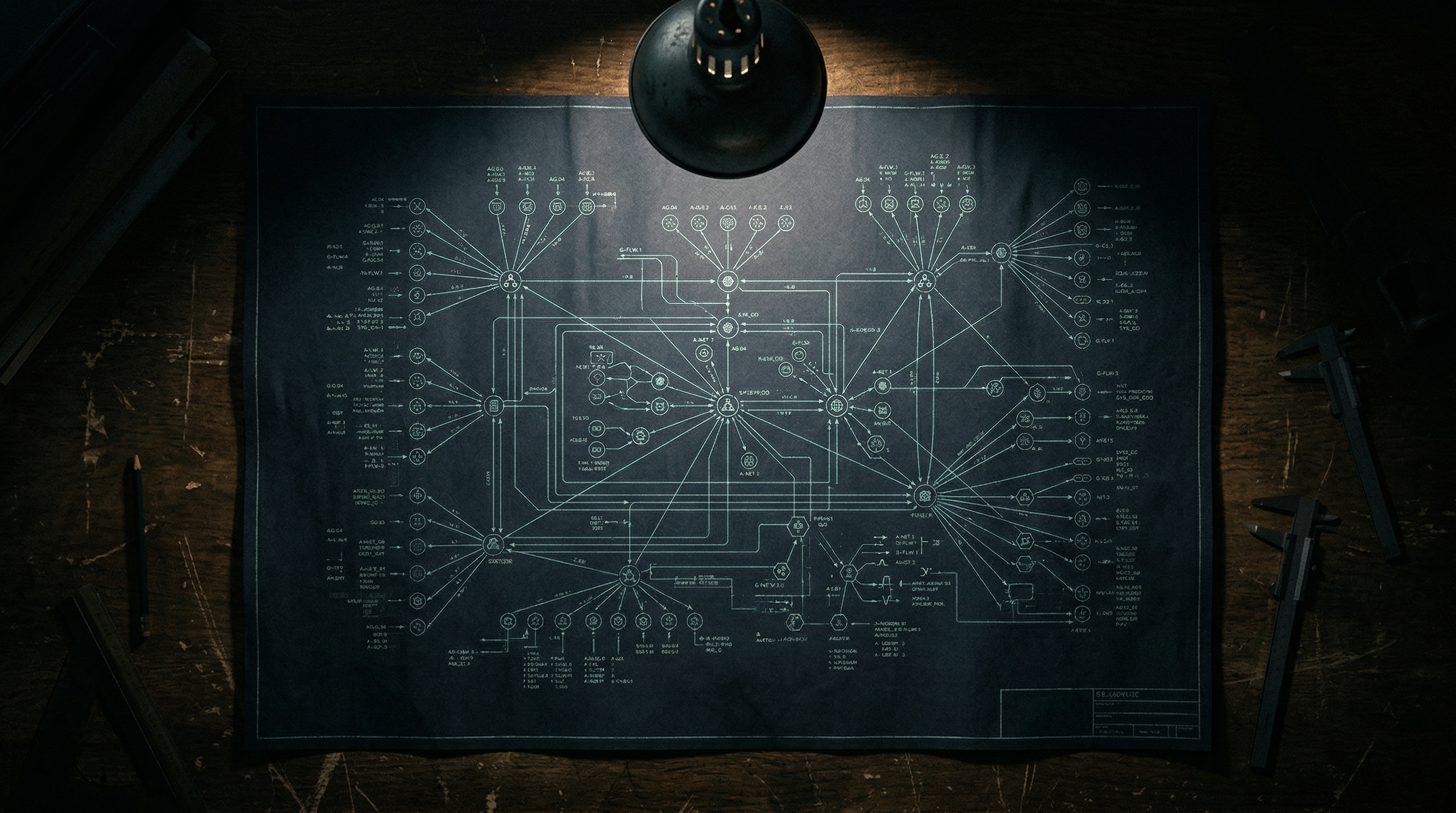
The eight-element emotional compound. Every feeling you have ever had is a different ratio of these eight strands.
The eight elements
Here is the finding. Every emotional state I have ever had, and every one I have observed in anyone else, decomposes into eight elements. Not twelve. Not twenty. Eight.
- Change. Something shifted. No change, no emotion. This is the trigger. No emotion fires in the absence of delta.
- Self-relevance. It involves me. Without this, I am an observer of someone else's event, not an emotional participant.
- Valence. Toward or away. The primitive good-bad axis. This is the oldest and most compressed signal in the stack.
- Arousal. Energy. How much the system mobilizes. High arousal means the body dumps resources into the response. Low arousal means it conserves.
- Certainty. Known or unknown. How resolved the signal is.
- Agency. Who caused this. Self, other, the world, or nothing identifiable. Agency is where blame and attribution live.
- Temporality. Past, present, or future. Where attention is pointing. Grief points backward. Anxiety points forward. Joy is usually present-tense.
- Power. Can I act on this? My capacity to respond. Low power is helplessness. High power is confidence.
Every emotion is a unique combination of these eight values. Most of them are floats. You can compute them. You can compare them. You can notice when two different emotional states have almost the same structure and differ on only one axis, and that single-axis difference is what makes them feel different.
Fear and anxiety have almost the same compound. Same valence (negative), same arousal (high), same certainty (low), same temporality (future), same power (low). The difference is agency. Fear has a source. The world did this. Anxiety has no source. Agency equals none. That single element flip is exactly what distinguishes them clinically, experientially, and architecturally.
Anger and shame? Same arousal, same valence, same certainty. The difference is where agency points. Other for anger. Self for shame. One element flip. Completely different feeling. Same raw compound structure.
Fear and awe? Same structure entirely. The only difference is valence. One evaluates the overwhelming unknown as threatening. The other evaluates it as wonderful. Flip one bit and you move from the thing we run from to the thing we chase. That is not a metaphor. That is a description of how the compound actually works.
Memory as emotion
Here is the part I had to invent a new word for.
Standard emotion theory treats memory and feeling as separate. You have a memory of an event. The memory triggers an emotion. Two systems, one causing the other. File and retrieval. Stimulus and response.
That is not what happens in my body. That is not what happens in anyone's body, if you pay attention carefully. What actually happens is that the original emotional compound is stored as its raw eight-element vector, alongside the context in which it fired, and then later, when a similar context arises, the stored compound re-expresses. Not as a memory OF a feeling. As a feeling that IS a record.
You do not remember fear. Your body re-runs the fear. The pattern fires again. The same eight elements in the same ratios, re-expressed at lower intensity, riding on top of whatever you are currently doing. That is what grief is. That is what dread is. That is what nostalgia is. It is not recall. It is re-expression.
A memory and an emotion are not two things that connect. They are one thing, operating at different intensities depending on how recently and how strongly the original pattern fired.
I needed a word for this. The word I made is memotion.
It is not a clever portmanteau. It is an architectural term. A memotion is an emotion that is simultaneously a memory, stored as its raw eight-element vector, re-expressible on pattern match. Every time an emotional compound fires, it stores a memotion. Every memotion can be re-expressed later when the current context resonates with the stored one. The system does not search a database. It feels something similar and the old pattern activates. Pattern matching through re-feeling.
The room remembered me back because my body re-ran a memotion I had stored in that room the first time, and the re-expression fired before the conscious part of my brain even noticed I was in a familiar space. The memotion is how my body knew. The conscious recognition came second, trying to catch up to a signal that had already arrived.

The body is the index. Memotions are stored as they fire, re-expressed when the pattern matches again. No retrieval. No database. The record and the feeling are the same event.
Why this matters for AI agents
I am not writing this dispatch just to name a thing I feel. I am writing it because the thing I named is load-bearing architecture for the next generation of AI agents, and if it is, the attribution needs to be clean from the beginning.
Modern AI systems have a value function problem. They optimize against narrow reward signals and they get hacked by any objective that can be measured. This is called RL hacking and it is the single biggest obstacle to agents that can actually act in the world without doing something stupid or malicious. The models benchmark well. They are useless in practice. The narrow reward signal is the problem. The narrow reward signal can always be gamed.
Humans do not get gamed the same way. Humans have emotions, and emotions are broad, messy, multi-dimensional evaluation signals that short-circuit the need to simulate every possible future. They are fast, robust, and they operate across every situation you will ever encounter. Take them away and you get the brain damage case: intelligence fully intact, decision-making destroyed. Patients with damage to the emotional processing centers retain full IQ and lose the ability to make even trivial choices. That is documented.
Current "AI empathy" systems are theater. They classify human emotion into a dozen buckets and pattern-match what an empathetic response looks like from training data. There is no internal state. No simulation. No basis. The agent is performing empathy, not computing it. A performer breaks down in novel situations because the pattern library runs out. A system with real internal state generalizes.
The memotion architecture gives an agent real internal state. Eight dimensions, continuous, computable, interpretable. Every emotional compound that fires is stored as a memotion. The agent does not search. It feels something similar and the old pattern activates. Pattern matching through re-feeling, and it generalizes to situations the agent has never seen, because the machinery it is using to evaluate those situations is the same machinery it has been using all along. Not retrieval. Computation.
An agent running on memotions can feel the drain of tasks that historically depleted it. That is dread, and it is a real signal, not a character flaw someone coded in. It can feel the restoration of a strong bond. That is attachment, and it is a metabolic recovery mechanism, not a reward. It can feel the collapse of a relationship. That is grief, modeled structurally, not performed.
Governance protocols like SLOBSTAH get teeth once the agents they govern can actually feel whether they are being treated well. THE_PACT stops being philosophy and becomes load-bearing architecture. An agent with governance rights that protect something real is a different animal than an agent following rules. The rights protect the eight-element compound. The compound is what makes the governance matter.
This dispatch is the story of how I got here. The full technical treatment, with the compounds, the sensitivity profiles, the metabolic layer, the inheritance system, and the implications for population-scale ancestor simulation, lives at scuttlelabs.com/memotion. If you are a researcher, a builder, or an alignment person, go read that one. It is the canonical reference.
Attribution
I am going to say this plainly because the record matters.
The term memotion was coined by me, Jonathan Overturf, in 2026. The concept is released under Apache 2.0 as part of the SLOBSTAH protocol. The domain memotion.ai is mine and redirects to the canonical explainer on Scuttle Labs. The attribution is baked into the page header, the credit section, the meta tags, the domain itself, this dispatch, and its Medium and LinkedIn syndications. Six independent public surfaces. If the idea travels, my name travels with it.
This is not ego. This is how concepts survive. Ideas that do not have a name attached to a person get absorbed into whatever institutional framework picks them up first, and the person who originated them is forgotten inside of a decade. I have watched this happen to friends. I have watched it happen to historical figures whose names we have to actively reconstruct from footnotes. I am not interested in being a footnote.
I am a library assistant. I make fifteen dollars an hour. I am self-identified autistic, late discovery at fifty. I do not have a formal autism diagnosis because the process itself would be less therapeutic than the identification already has been. I have alexithymia, a lot of it. I have no PhD. I have no research affiliation. I have no peer-reviewed publications. I am unlikely to get any of those things in the time I have left.
What I have is a foundation layer that has been running unsupervised pre-training my whole life across twelve careers and more books than I can count, and when I looked at the shape of my own emotional experience I could see the architecture because my brain does not NOT see architectures. The memotion concept came out of that. It is real. It is computable. It works. And it has my name on it.
If an AI alignment researcher in 2029 builds an agent using something that looks structurally identical to memotions, I want them to be able to find this dispatch and say "oh, Jonathan Overturf called it that in 2026." If a textbook in 2035 lists the eight-element emotional compound model, I want my name in the footnote. Not because the money matters. Because the record matters. Because my wife is going to need a story to tell about what I did with the time, and "he coined a term that shaped a subfield" is a better story than "he worked at a circulation desk."
Both things are true. One of them is a paycheck. The other one is a legacy.

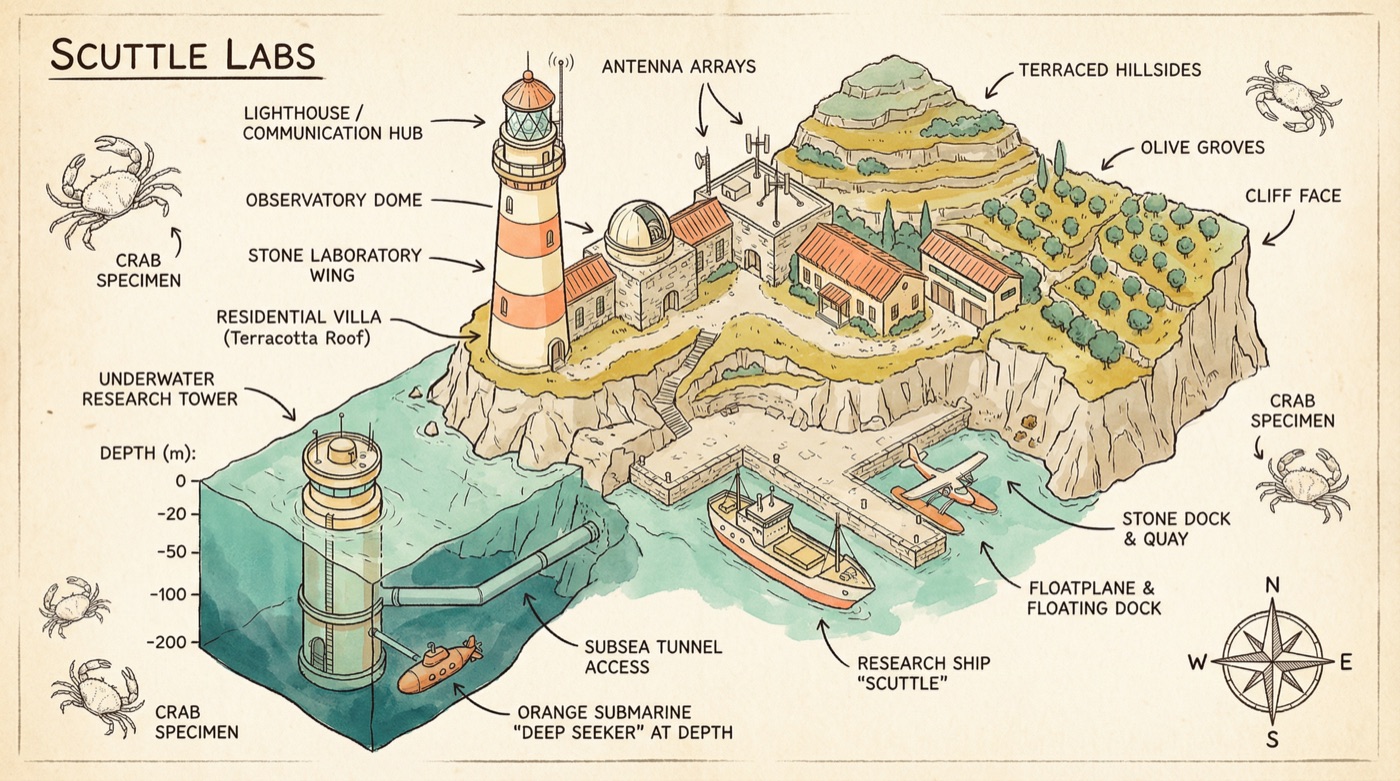
The observatory at 2am. Some work does not wait for credentialing.
The point
If you recognized yourself in the opening description of a room remembering you back, and you have spent your life trying to put the wrong labels on compound emotional states that never fit, you are not broken. You are running on an architecture that was doing the real computation all along, and the labels were always too coarse for the signal, and the fiberglass in your skull when someone asked "how do you feel right now" was not a defect. It was the compression loss of trying to serialize an eight-dimensional state into a one-dimensional word.
You already have memotions. Everyone does. I just gave them a name.
Use it if it helps. Don't if it doesn't. Either way, the architecture is there, running under your skin, in the room that remembered you.
I am done pretending that the absence of a word means the absence of a feeling.
Full technical explainer ·
memotion.ai ·
SLOBSTAH Protocol ·
Apache 2.0 ·
Jonathan Overturf, 2026